Hosting note
New-Hire Games for Someone’s First Week
They have a badge that sometimes opens the door, a laptop that does not yet have the tools, and a calendar full of people they have not met. Someone on the team said you should do a game, because a slide that says “our values” has already been survived once today. A new-hire game works when it makes the room legible: who sits where, which joke is already a joke, which name is said which way. It fails when it is a test, and the new person can feel a test from the second clue.
One board. Four categories. Sixteen clues. The screen is a laptop everyone at the table can see, or the television in the room you booked. Phones are the buzzers. You read the clue, you open the buzz, you decide who was right, and the score stays on the screen. People join with a six-digit code. No app and no account. The new person should not have to make a login to be welcomed.
This is not the lunch-hour game about the work in general. That one is office team building games that fit in a lunch hour. This one has a person in it who does not know the lore yet, and the board has to be glad they are here.
It is not an assessment
Say this before you write clues, and say it again when you start. The score is not a signal. It will not appear in a probation note. It will not be a story you tell their manager. If you cannot promise that, do not play. A room that suspects the buzzer is an interview will play tight, and the new person will play terrified, and you will have spent an hour teaching them that this team hides the real rules.
Write clues the new person can hear without being the subject of a roast. Their name, said correctly, can be a 100 if the team still gets it wrong and they have already laughed about it with you. Their previous job can be a clue only if they offered the story. The city they moved from, the same. A 400 that is a mistake they made on Monday is not a gift. It is a record. Leave it off.
The board is about the team they joined, more than about them. Where the mugs are. What the Friday meeting is actually for. The name of the person who can reset a password. The project the team is proud of, in one sentence a new person can repeat later and not be wrong. You are handing them a map. The buzzing is how the map stays in the room instead of in a document they will not open.
Four columns. One for the place. One for the people, with facts those people are happy to have said out loud. One for the work, in words that do not require a glossary, or with the glossary as the easy row. One that is simply easy, a column the new person can win, so the hour does not end with them at zero while everyone else performs belonging. If they are at zero at the end, the board was a wall. Rewrite it before the next hire, and do not make them sit through this one as a lesson.
How long, and who is in the room
A full board runs somewhere around twenty-five to thirty-five minutes once buzzing makes sense. In a first week, that is a lot. Play it at the end of a welcome lunch, not in the middle of a setup session, and tell them the length when you book the room. Eight clues is a kinder first day if the rest of the day has already been long. Sixteen is fine on a Friday when the point of the afternoon is the team. Say which one. Do not surprise them with a second board.
Teams of two or three. Put the new person with someone who will pass them the phone and not answer over them. Do not put them alone. A team of one, on their first week, is a stage. One phone per team. The code stays on the screen while people are still sitting down. Nicknames will happen. Read them once. If a name is a joke about the new person, change it before the first tile. You are the host.
Free covers 20 people and 6 teams, which is a real team and not a department all-hands. Night is $12 for 48 hours and 100 people. Host is $6 a month, or $48 for the year, with the same 100-person room. The team cap stays at 6 even after you pay. Players never pay. A first-week game should fit in the free room. If it does not, you invited a crowd too big for a welcome. The limits match the pricing page.
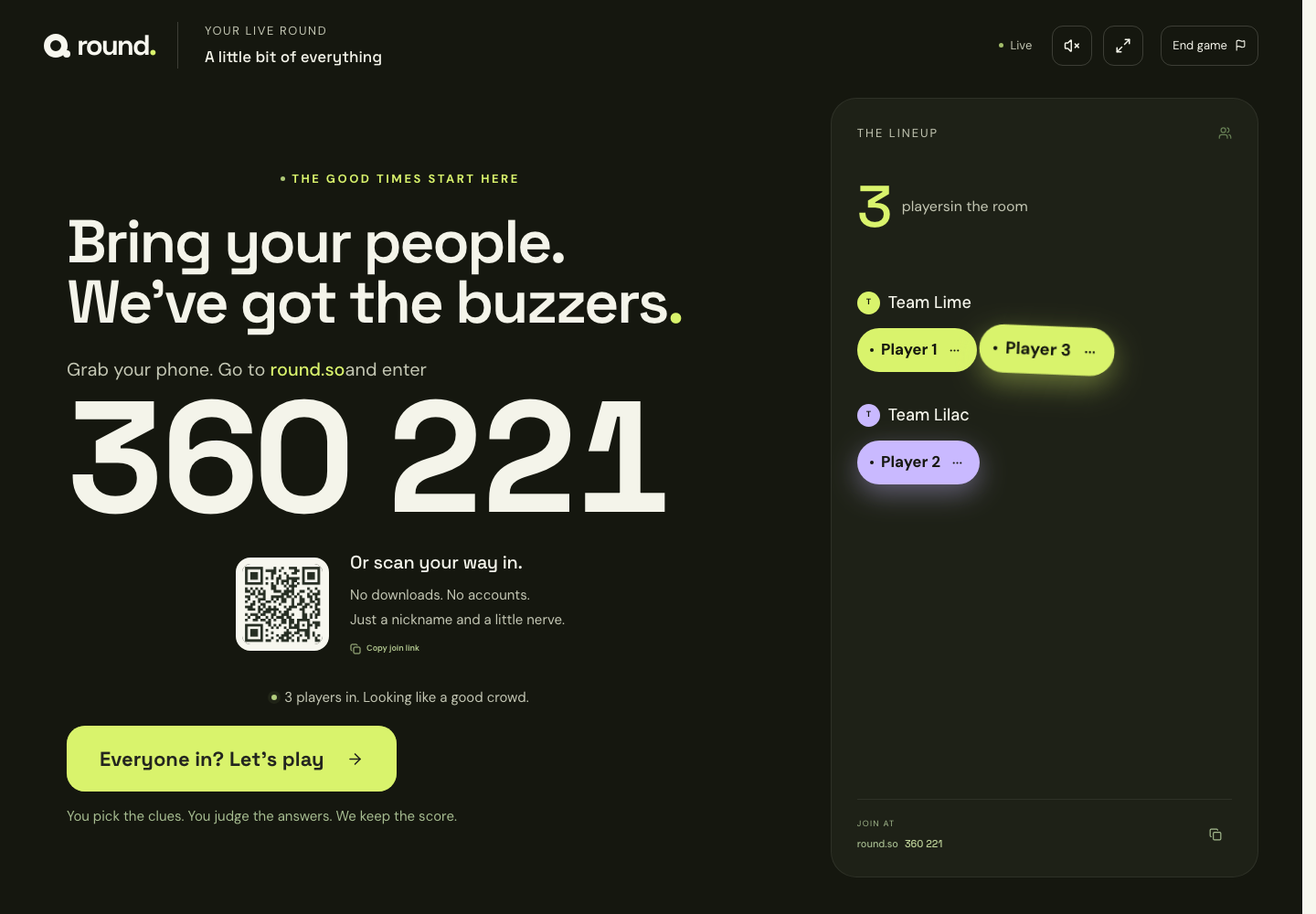
This is the screen you leave up. They join in the browser. You are not collecting accounts, and you are not adding them to a tool they will see again in a performance folder.
The rules, said once, without the company voice
You read the clue with buzzing closed. Then you open it. An early press waits a quarter of a second, so mashing during the sentence does not win. The new person will not know this. Say it in one line before the first clue, and then let the first early press demonstrate it. Do not scold. They are learning the buzzer and the building on the same day.
The team that buzzes clean gets eight seconds. You judge. The clock does not mark anyone wrong by itself. Office scoring takes the value of the tile off for a miss. That sting is ordinary for a party and sharp for a person who has been here three days. Keep the 100s easy enough that a deduction is rare. If you want no deductions at all, you would have to pick Kids or Classroom on the way in, and that switches the room to school scoring and the classroom colors. For a welcome lunch of adults, stay on Office, and write a gentle top row instead of dressing the hour up as a class.
Ten seconds of nobody buzzing and you reveal the answer. Do not coax the new person through a clue they cannot know, in front of the team, for a full minute. Say the answer. Add one sentence of context if the answer is a name or a tool they will need. Move on. The context is the welcome. The silence while everyone waits for them to guess is not.
After a right answer, that team picks the next tile. If their team just scored, let them pick, or let them point and have a teammate say it. Picking is a small piece of power on a day when they have had none. Use it on purpose once or twice. You do not need to announce that you are being kind.
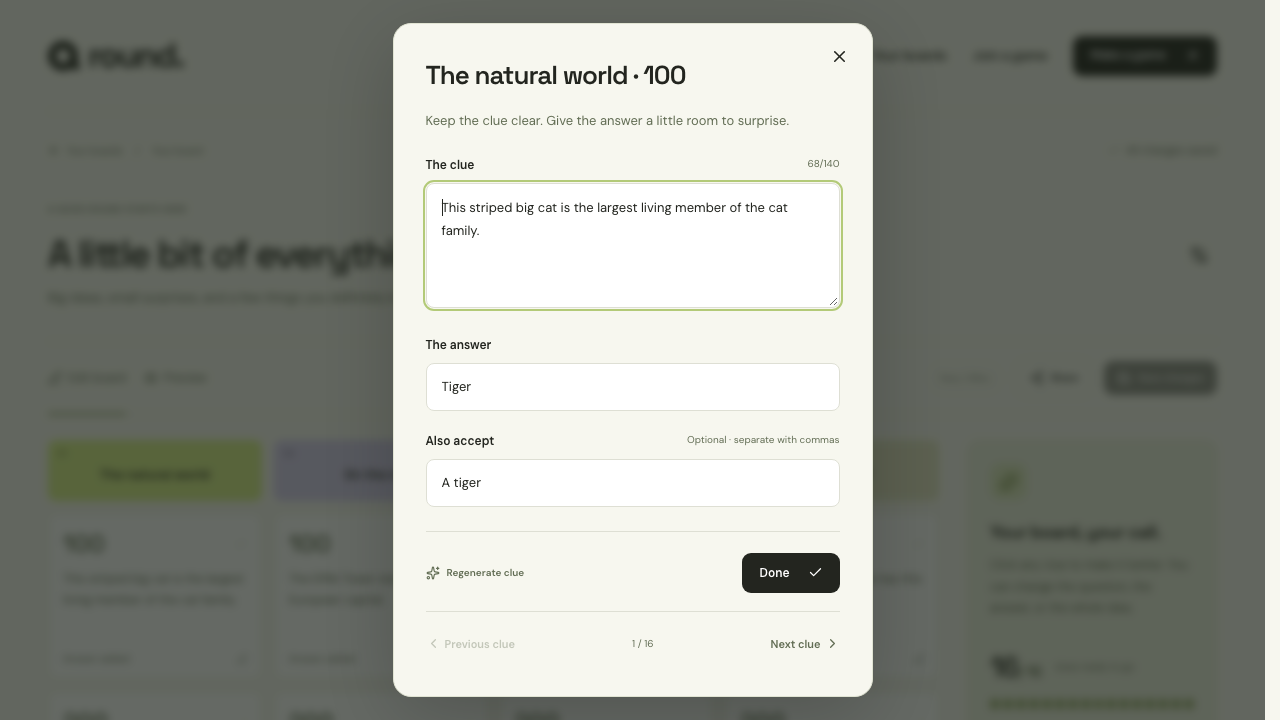
Write the other acceptable wording before you start. The short name of the tool and the long one. The nickname and the name on the badge. You will hear both, and you do not want the new person to watch you hesitate about whether their version counted.
What to leave out of the first week
No clue whose answer is a person they have not met, unless that person is in the room and has agreed to be the answer. No clue about a reorg, a layoff, a client you lost, or a fight the team is still having. They will hear those stories later, from a person, in a kitchen, when they can ask questions. A buzzer game is a bad archive for the unhappy parts.
No “gotcha” about a mistake in the handbook. If the point is that the kitchen dishwasher has a trick, make it a 100 and smile when you reveal it. If the point is that they should have known, you are not hosting. You are grading, and you said you would not.
The founder story, if you tell it, is one clue, not a column. A column of origin myth is a speech the new person cannot buzz their way into. One 200, the version the team actually tells, is plenty. The rest of the board is the week they are in: the stand-up, the doc, the person who reviews, the lunch that is good.
If more than one person started this month, write a board that does not make them compete to be the most prepared. Put them on different teams if the teams are mixed with people who already work here. Do not make “the new hires” a team against “the real team.” That game has a name, and the name is not welcome.
After the score
Name a winner, lightly. No prize that looks like an award. The point was the map. If you take a photo, ask the new person before it goes in a channel. Their face on a scoreboard is not a default.
Close the laptop. Tell them the one thing from the board they will actually need on Monday, in a sentence, not a follow-up quiz. Then let them leave with the rest of the team, not with you for a debrief of how they played. If you want to know whether the hour helped, ask next week, in private, one question. “Was there a clue you were glad was on the board?” If the answer is no, the next hire gets a different board.
You can run this again. Keep the place column. Retire the clues that were only true for this month. A first-week game that never changes becomes a script, and the team will perform it, and the new person will notice they are watching a ritual that is not about them.
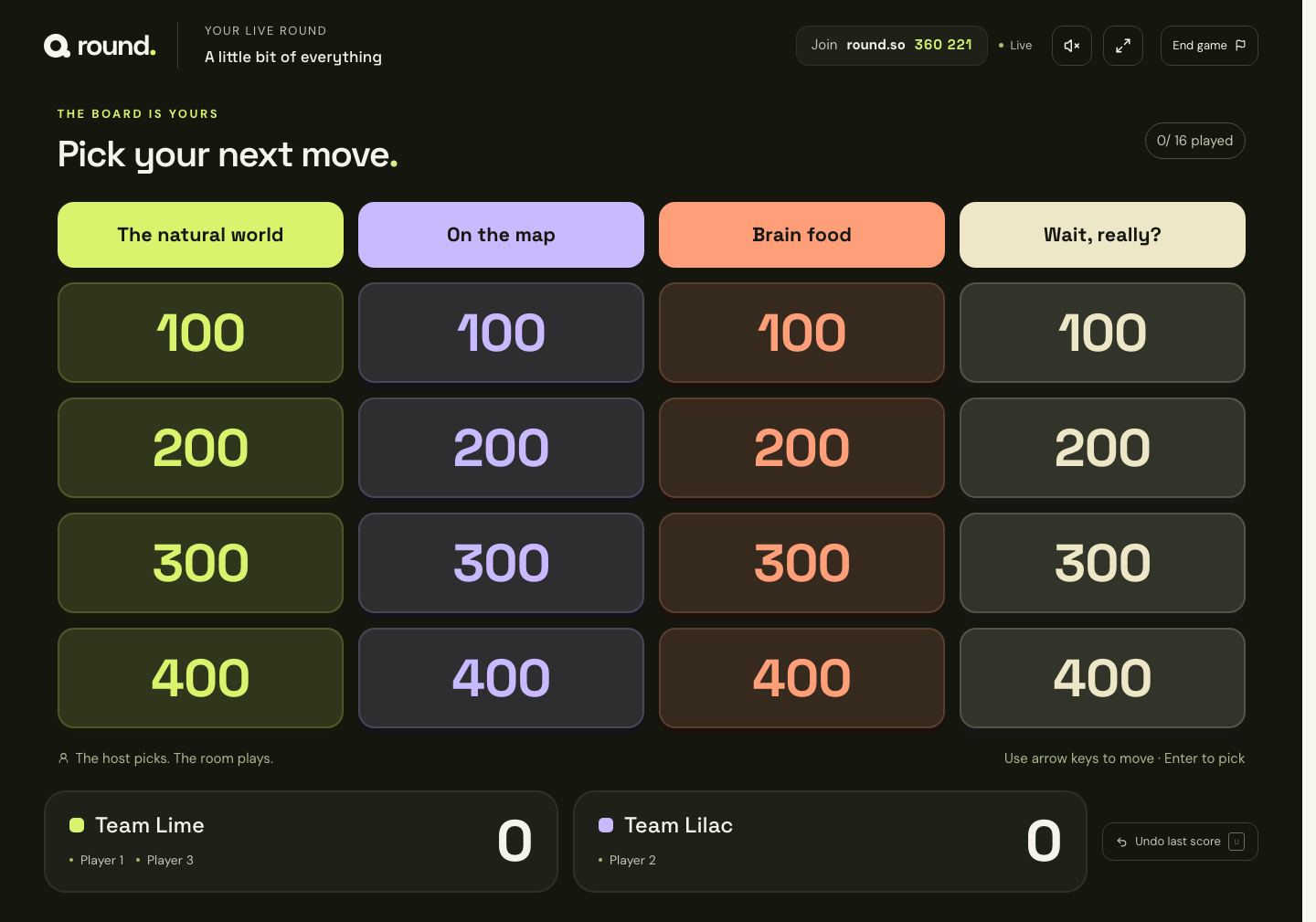
Start from a board that still looks like this: everything closed, nobody ahead. The new person should see a game, not a score they have already lost.
Questions managers ask before they book the room
Should the new person host?
No. They have enough to hold. You host, or a peer hosts. They play. If they want to write four clues about something they already know, that is a gift, and it is optional. Do not assign it as pre-work.
How long should a first-week game be?
Eight clues on a crowded first day. Sixteen if the lunch is the welcome and the screen is ready. One board. A second board is a different week, after they know where the mugs are without a clue.
What if they get every answer wrong?
Then the clues were about a team they have not met yet. Reveal the answers, keep the tone ordinary, and do not apologize in a way that makes it worse. Next time the easy column is things in the room. The score is not a measure of whether they will be good at the job.
Do they need an account?
No. The six-digit code, a browser, someone else’s phone if they would rather not use theirs. They are already making enough accounts this week.
The afternoon before they arrive
Write the sixteen clues, or the eight, from the team that will be in the room. Read them out loud. Cut any sentence you would not say to their face on day one, because you will be saying it to their face on day one.
You can start from a board on the new-hire boards, or write this team’s version on the create page. Pick Office. Keep the 100s easy, because a miss costs the tile. The sentences, if you want them shorter, are in trivia night questions you can read out loud. A first week needs a map more than it needs a hard 400.
Host a new-hire onboarding round
One screen, sixteen clues, phones as the buzzers. The new-hire onboarding boards are already written, or start from a blank grid.
Make a new-hire onboarding game