Hosting note
Birthday Party Trivia the Guest of Honor Can Stand
The cake is on the counter and someone has already asked what the game is. You said trivia, because a speech felt worse, and now you are holding a list of questions that treat your friend’s life like a pub quiz they did not study for. Birthday party trivia works when the person in the paper crown would be glad to hear every clue read out loud. It fails when the 400s are secrets, old relationships, or the year they would rather not have narrated to a room that includes their manager and their mother.
One board. Sixteen clues. Four categories. The guest of honor does not play to win. They are the subject, and they should be allowed to sit with a drink and hear their own life come back slightly wrong, which is the pleasant version of being known. If they want to play, put them on a team that is not trying to prove they remember their own birthday.
The living-room version with no birthday attached is how to host a trivia night at home. A work lunch is office team building games that fit in a lunch hour. A reception between courses is wedding reception games that fit between courses. A birthday is shorter than those want to be, because people came to eat.
What the board is allowed to know
Write the answer first, and only write an answer the guest of honor has told in public. The city they grew up in. The song they will play twice. The job they had before this one, if they tell that story at dinner. The pet’s name, if the pet is in the room or in every photo. A 100 should be easy for more than one person in the room, or the first clue becomes a test of who has known them longest, and that contest has a winner you may not want.
A 400 can be a detail only their closest friend remembers, on purpose, so that friend gets a moment. It should still be a detail the guest of honor likes. "The first concert" is a gift if they light up. "The first concert" is a trap if the story ends in a breakup they do not tell at parties. If you have to check with someone else whether it is okay, ask the guest of honor, or leave it off. A surprise roast is not a surprise they consented to when they agreed to cake.
Four columns is enough. One for the person. One for the people in the room, so guests who met them last year can still score. One for a show, a city, or a year you all share. One that is simply easy, so a table of cousins who do not play games can get a point and stay in it. Values climb 100, 200, 300, 400. If the 100s are riddles, the warm-up never happens.
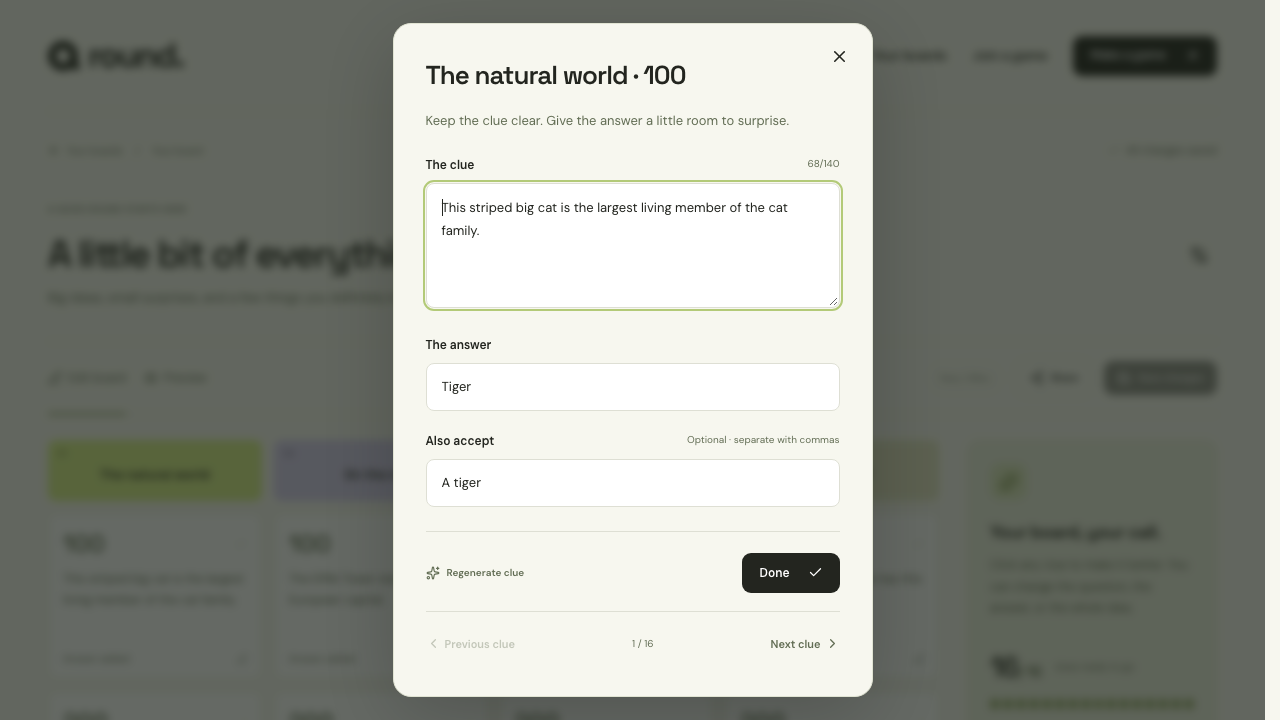
Put the other wording on the card. People will say the nickname and the proper name. Decide both before anyone is watching your face.
How the hour should feel
Teams of two or three. Couples can share if the night is gentle. One phone per team. The six-digit code stays on the screen while people are still coming in from the kitchen. They join in the browser. No app, and no account, which matters when half the room is a person you see twice a year and will not ask to install anything.
You read the clue, then you open the buzz. An early press waits a quarter of a second, so mashing during the sentence does not win. The team that buzzes clean gets eight seconds. At a birthday, a wrong answer should not cost them the tile. A miss scores nothing. The score does not go below zero. This is a party for someone, not a final. Ten seconds of silence and you reveal the answer yourself. Do not coax. The cake is the point, and coaxing is how you lose twenty minutes.
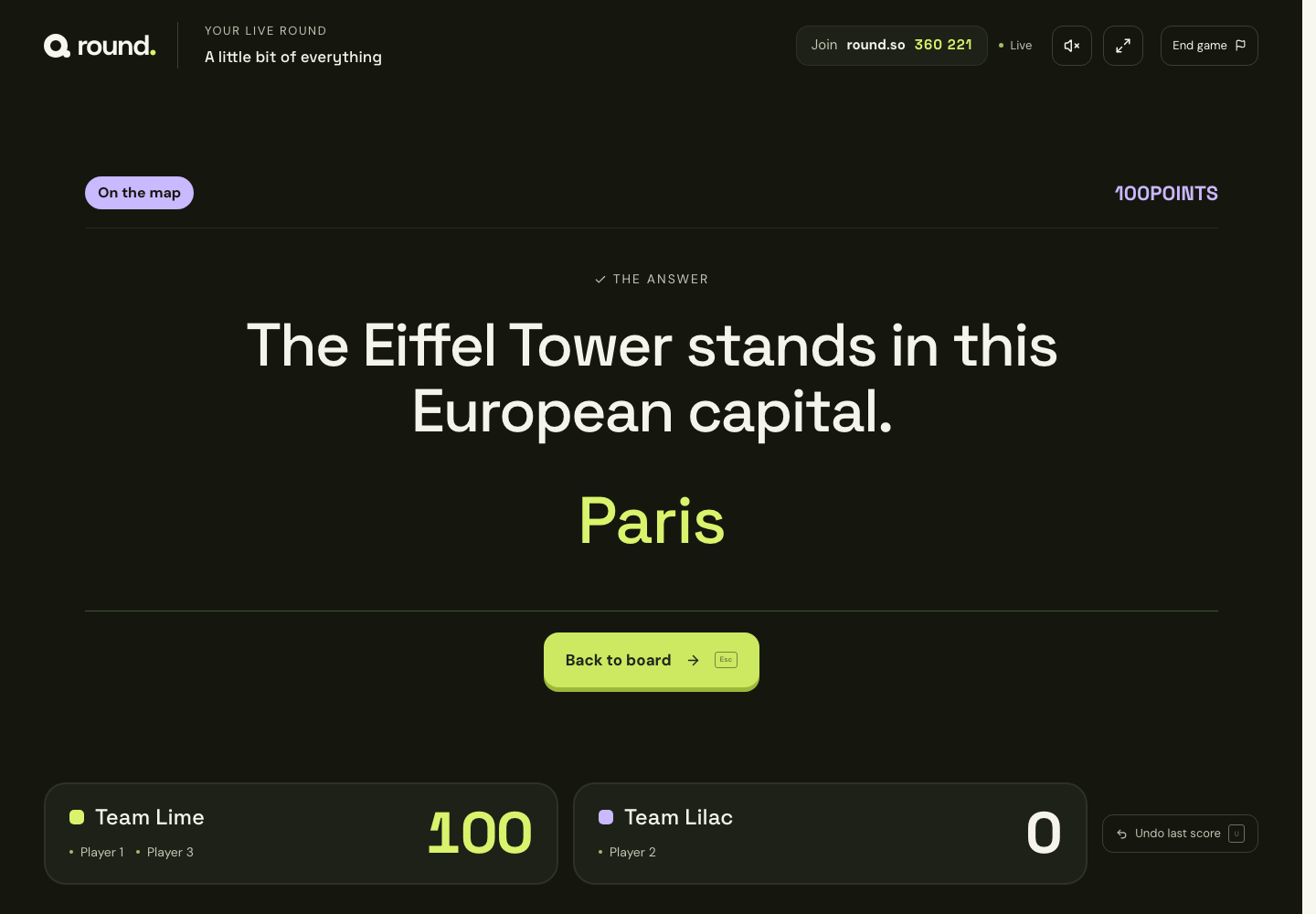
Say the answer, let the guest of honor add one sentence if they want the story, and go back to the grid. If they do not want the story, you do not interview them. The button is on the screen so you are not hunting through photos while someone tells a version they did not ask to relive.
One board is about twenty-five to thirty-five minutes once buzzing makes sense. That is the right length between dinner and the cake, or after the cake if people are still sitting down. A second board is a different party. Play it only if the room asks, and only if the guest of honor is still having the night you think they are having. Look at them, not at the score.
The friend who brought a speech
They will want the microphone, which you do not have, and they will want the 400s to be their memories. Give them one column if those memories are kind. Do not give them the board. A birthday trivia that is one person’s archive becomes a lecture with points, and the other tables go quiet in a way that is not the same as concentrating.
If someone shouts an answer before a buzz, ignore it. "We didn’t hear a buzz." Enforce it once. The guest of honor will be relieved, because the shout was about to become the story of the night instead of their story.
Prizes should be ridiculous. The last slice, a paper crown that is not the birthday crown, bragging rights until next year. A prize worth real money makes a close call feel like a ruling. You do not want a ruling at a birthday. You want a winner so people can clap, and then you want the lights a little lower.
Questions people ask the week before
How many birthday trivia questions do you need?
Sixteen, in four categories. A list of forty is a document you will not finish, and the person you are celebrating will feel the length. If the group is tiny, play twelve and stop. End while you still like each other.
Should the guest of honor play?
They can, on a team, if they want to. They should not be the one who knows every answer and then has to pretend to be surprised. Sitting out, with a fork, is a complete way to be celebrated. Tell them which one you planned, so they are not handed a phone in front of everyone.
What if some guests barely know them?
That is what the other three columns are for. A board that is only biography rewards the oldest friendship in the room and benches everyone else. One column of the person is a toast. Four columns of the person is an exam.
Do you need a projector?
You need a screen everyone can read from the far chair. A television works. A laptop on the table does not, because half the room will stand up and the other half will guess. Phones are the buzzers, not the board. If the Wi-Fi fails, point to the first full hand and keep the same eight seconds. Say that backup before you start, so it does not arrive as a crisis.
Write it like a toast you can score
Sixteen clues, checked out loud the night before, with the guest of honor’s name said kindly in your own kitchen. The 100s should make more than one table smile. The 400s should make one person proud to have been there for the story. Leave out the rest. Put the code up, play one round, and go back to the cake while people are still glad they came.
A finished birthday board is on the birthday boards, if you want the shape before you write the personal column. Your own board starts on the create page.
Host a birthday round
One screen, sixteen clues, phones as the buzzers. The birthday boards are already written, or start from a blank grid.