Hosting note
Lunar New Year Games for the Table You Have
The table is already too full, which is the point. Someone is still in the kitchen. Someone has asked if there is going to be a game, because the dinner is long and the children are finished eating before the adults have started the stories. Lunar New Year games work when they are about the people at this table, on one screen, and they end when the next dish needs the room. They fail when they are a quiz about the holiday pulled from a website, a list of zodiac facts nobody in the family needed, or a contest about who remembers the old country more correctly.
One board. Four categories. Sixteen clues, 100 to 400. The television you were already going to use, or a laptop at the end of the table if that is what fits. Phones are the buzzers. You read the clue, you open the buzz, you decide who was right, and the score stays on the screen. People join with a six-digit code in the browser. No app and no account. Half the people at a reunion dinner should not be asked to install something between dishes.
A Christmas table in the same family is Christmas games for the people already in the room. A Sunday with no holiday attached is family game night on the screen you already have. This dinner has its own clock, and the clock is the kitchen.
Play between dishes, not instead of them
Decide the length while the rice is still cooking. A full board runs somewhere around twenty-five to thirty-five minutes once buzzing makes sense. That is a real gap only if the dinner is the long kind and you have said the game is part of it. If the next course is close, play eight clues, the 100s and the 200s, and stop when the food is ready. Say that at the start so a competitive cousin does not feel robbed when you close the board with tiles still shut.
Put the screen where the person at the far end can read it, including an elder who will not ask you to repeat the type. Check from their chair before anyone sits. If the light behind the television washes the clues out, move a lamp. People will miss what they cannot read and then decide the questions were unfair.
Teams before the grid appears. Two or three teams is enough at a family table. Mix ages on purpose, or do not, but say which one you are doing so nobody negotiates it over the dishes. One phone per team, held by a person who can tap when they mean to. A child can say the answer. An adult can hold the phone. A child with the only buzzer will either win every race or press it during the question, and both of those end the game earlier than the food does.
Free covers 20 people and 6 teams, which is a full reunion table and the cousins who stayed. Night is $12 for 48 hours and 100 people. Host is $6 a month, or $48 for the year, and also covers 100 people. The team cap stays at 6 even then. Players never pay. If the gathering is larger than that, play the people who can see the screen. Do not promise the whole hall a buzzer. The limits are the same as the pricing page.
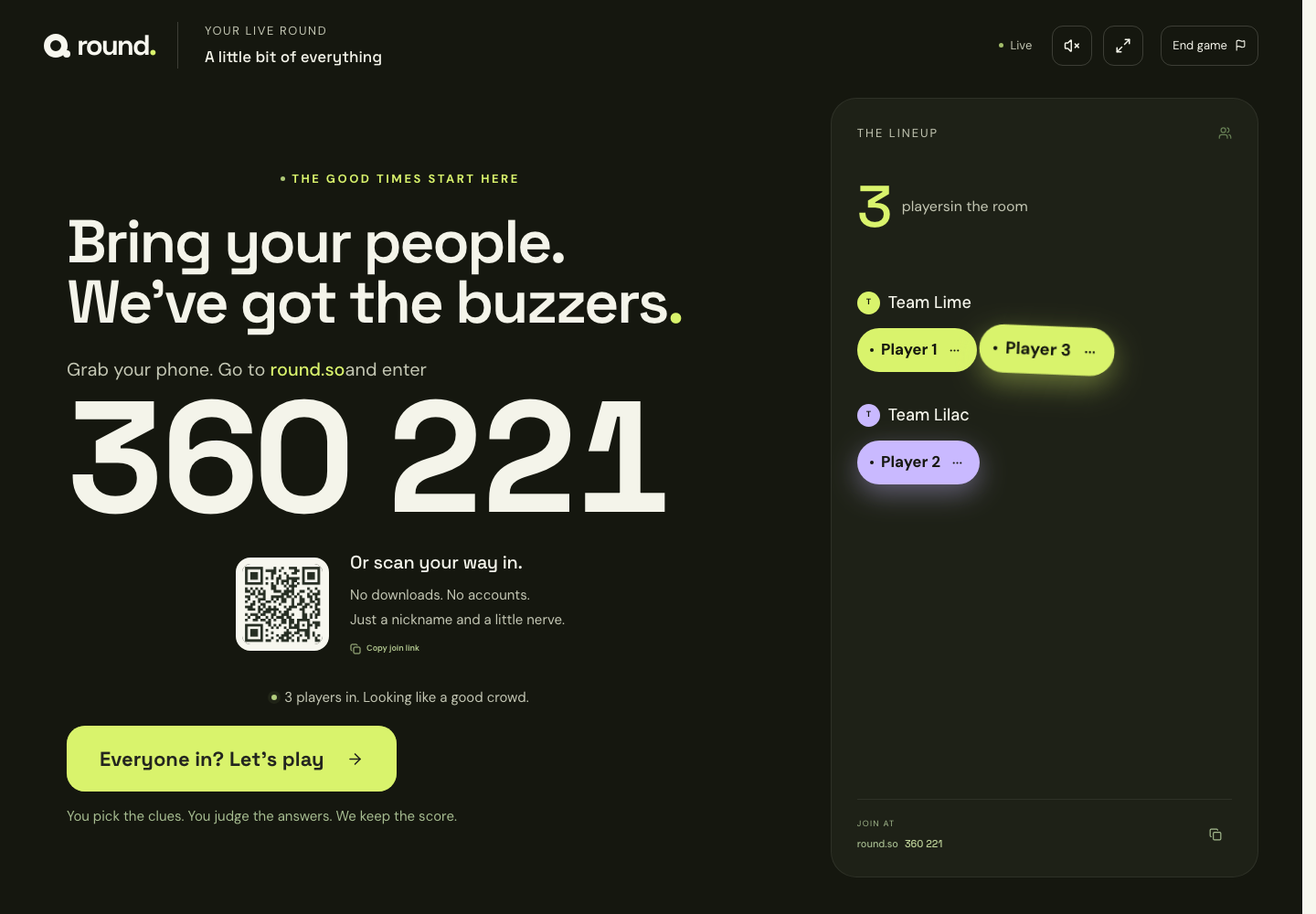
Leave the code up while people are still finding chopsticks. The code is the instruction. You should not also be explaining the rules and serving at the same time.
Clues from this family, not from a search
Write the answer first, and only an answer this table has already told. The dish that is not optional. The person who always arrives with the fruit. The year someone moved. The show the cousins quote until someone tells them to stop. A 100 should be easy for more than one generation, or the first clue is a test of who has known the family longest, and that contest has a winner you may not want at dinner.
The zodiac can be one clue, if the room likes it. It should not be the board. A column of animal facts is a quiz for no one at the table, and it flattens a dinner into a school worksheet. The same goes for a list of traditions explained as if the family were visitors to their own holiday. They are not. Write the version you actually do. If you do not give red packets, do not write a clue that assumes you do. If the greeting you use is a particular language or a particular joke, use that, and write the other wording you will accept, because someone will answer in the other language and they will be right.
Leave money arguments off the board. Leave the relative who is not here, unless the story is kind and already told. Leave anything you would not say with the eldest person listening, because they are listening. A 400 can be a small true detail one cousin remembers, so they get a moment. It cannot be a grievance. If the story still has a side, it is not a clue. It is a conversation for a kitchen, later, with fewer people.
Four columns. One for the food. One for the people in the room. One for the year you just lived, so the visit is not only about the past. One that is easy all the way down, so a guest who married in, or a child, or a friend who was invited to the dinner, can score without studying the family. Difficulty climbs on the other columns. If the 100s are riddles, the children are finished with the game before it starts.
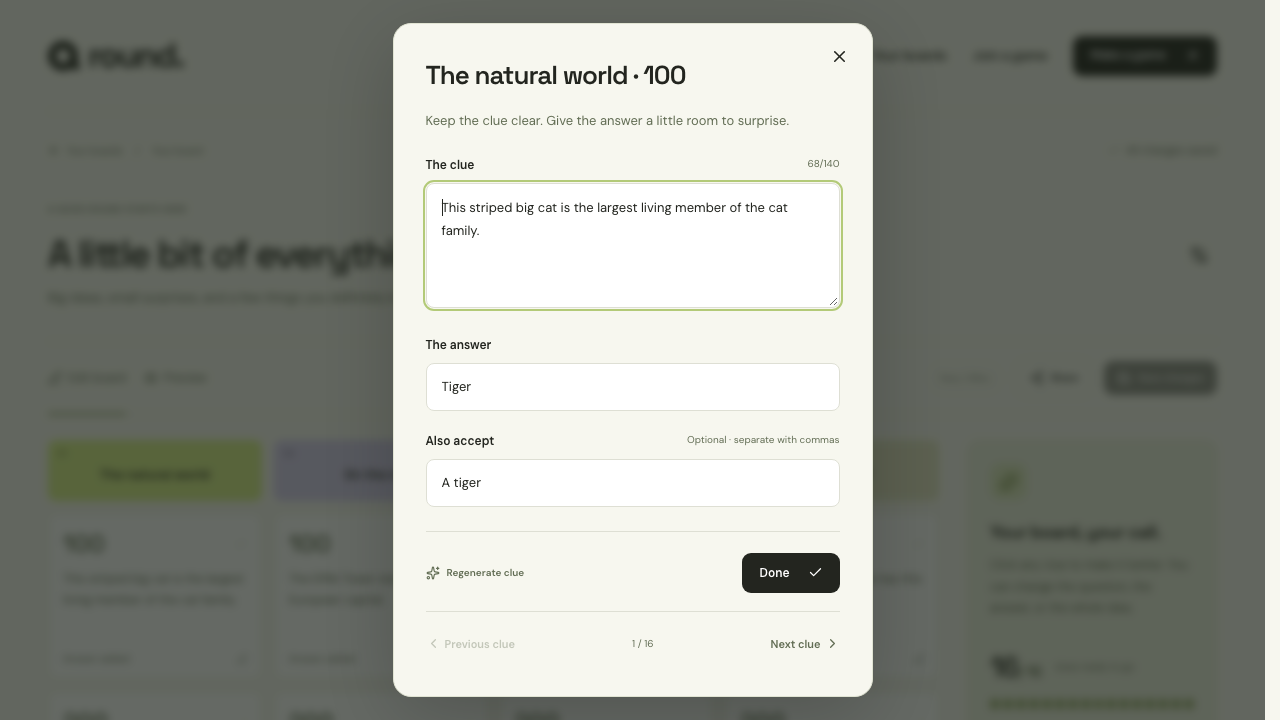
The card holds the sentence you read, the answer you want, and the other ways it will be said. Names, nicknames, the dish in two languages. Decide them before anyone is watching your face.
Who holds the phone, and what a miss costs
You read the clue with buzzing closed. Then you open it. An early press waits a quarter of a second, so the person who taps during the sentence does not win. A child will test this at once. Let the lockout show them. Do not raise your voice over the table. The next clue is the lesson.
The team that buzzes clean gets eight seconds. You judge. The clock does not mark them wrong while you are still listening, which matters when a grandparent is circling the name and needs the last word. At a party, a wrong answer costs the value of the tile. With children buzzing, pick Kids before you start. A miss then scores nothing, and the score cannot fall below zero. Friends and family keeps the sting, and that is the setting for a table of adults who want it. Kids also uses the classroom colors. For a reunion where children are actually playing, take that trade. For adults, stay on Friends and family and keep the 100s easy so a deduction is rare. Do not switch halfway through because a favorite cousin is losing.
Ten seconds of nobody buzzing and you reveal the answer. Do not coax. Coaxing is how you miss the next dish. Say the answer, add one sentence if the room wants the story, and go back to the board. After a right answer, that team picks the next tile. If one side of the family is running away with the night, hand a pick across the table. “Your pick.” People who have been sharing plates all evening understand a turn.

Say the answer and get out of the way. The button back to the board is on the screen, so you are not narrating a slideshow while someone refills the tea.
Elders, children, and the person who knows every story
Elders do not have to buzz to be in the game. They can call the answer. Someone else holds the phone. If they would rather watch, the board should still have clues they are glad to hear, not clues that explain their holiday to them. Ask, before dinner, for two facts they would like on the board. You will write better 200s than any list you could have searched for.
Children get the easy column and a lot of the food column. They should not be quizzed on years from before they were born and then consoled in public. Those clues belong on a column the adults can win. An adult holds the phone if the child is young. The child speaks when they have an answer.
The person who remembers every story will be delighted, and then they will be the whole game. Give them one column. If they answer before a buzz, ignore it once. “We didn’t hear a buzz.” Then open it properly. You will annoy them a little. The rest of the table will be relieved. You only do it once, and you do it without a speech about respect. The buzzer is the respect. Everyone gets a turn to be heard.
Guests who are not family get the easy column and the year, if the year was lived in public. They do not get a lecture on how the dinner works. If you are writing a clue that needs a preface, it is not a clue. Tell the story later, if someone asks.
Stop when the kitchen is ready
Name a winner, because someone will ask. You do not need a prize. The last piece of something sweet, choosing the film if there is a film, bragging rights until next year. Do not tie the score to money. Packets, gifts, and the bill are already their own conversations. A game that pays out will make a gentle table hear a close call as a verdict. Keep this one free.
Stop when the food is ready, even if two columns are still closed. Read the score, say the team names you can say in front of everyone, and move the laptop off the table. Help carry the next dish. A host who will not leave the screen has mistaken the game for the dinner.
If the Wi-Fi in the house fails under a full reunion, you already know the backup. First hand fully up, eight seconds, same answers. The screen still shows the clue. For one round you can point. Then you eat.
Questions families ask before they clear a space for the laptop
How long should Lunar New Year games last?
Eight clues if you are fitting them between courses. Sixteen if the dinner has a real gap and the screen is already working. Tell people which one when you suggest it. A second board is another night, not this one, unless the table asks the way they ask for more food.
Do we play in one language?
Play in the language you actually speak at the table, and accept the other if both are spoken in the house. Write both wordings on the card before you start. Do not make a person translate their own answer in order to score.
What if the children and the adults know different things?
Give each a column they can win, and an easy column they share. Pick Kids if children are holding the buzzers, so a miss does not take points away. End when the youngest player is done, even if the adults want the 400s.
Does anyone need an app?
No. A browser and the six-digit code. One phone per team. Elders do not have to tap anything. They can say the answer. Someone else can buzz.
The night before the dinner
Write the clues from the people who are actually coming. Read the children’s column out loud to an empty room and change any word they will not know. Cut any sentence you would not say with the eldest person at the table. Get the television input right before you call everyone in. The minute you spend on the remote is a minute someone starts a different conversation, and the food will not wait.
You can build the board from the Lunar New Year boards, from a page of notes about this family, or from a blank grid on the create page. Pick Friends and family for a table of adults. Pick Kids when children are buzzing. Keep the board. Next year’s dinner should not start from a blank page while the soup is on.
The sentences, if those are what stall you, are in trivia night questions you can read out loud. A reunion clue is one breath, an answer you have already agreed to hear in more than one wording, and a stop time that respects the kitchen.
Host a Lunar New Year round
One screen, sixteen clues, phones as the buzzers. The Lunar New Year boards are already written, or start from a blank grid.