Hosting note
Office Party Games for the Hour After Work
The calendar invite says party, and the room can already tell it might be a meeting with snacks. Someone from people ops asked for an activity. Someone else booked the same conference room you use for the forecast. Office party games work when they are a game, on one screen, with a finish time the people who have trains can see. They fail when they are a trust fall, a slideshow of the quarter, or a quiz about the employee handbook that the new people have not been given time to read.
One board. Four categories. Sixteen clues, worth 100, 200, 300, and 400. The laptop or the television is the host screen. Phones are the buzzers. You read the clue, you open the buzz, you decide who was right, and the score stays on the screen. People join with a six-digit code in the phone browser. No app and no account. That last part matters in an office, because you should not ask a contractor to make a login for a Thursday that ends at six.
A lunch that is actually about the work you share is office team building games that fit in a lunch hour. December, with coats and a harder exit, is office holiday party games that end on time. This one is the ordinary party: the hour after a launch, a Friday in March, the room that stayed because someone bought pizza.
The hour you actually have
Count it before you write a single clue. A full board, once people understand buzzing, runs somewhere around twenty-five to thirty-five minutes. That fits a Friday that was allowed to end early. It does not fit the fifteen minutes between the speech and the moment the facilities team wants the room back. If you have fifteen minutes, play eight clues, the 100s and the 200s, and stop when the tiles you promised are done. Say the number at the start. A closed board with columns still shut is a finished party. A host who will not stop is how a party becomes overtime.
Put the screen where the person in the back row can read a clue without standing. Check it before anyone arrives, from the chair farthest from the laptop. If the glare from the window eats the 400s, close the blind. People will not announce that they cannot read. They will miss the clue and decide the questions were unfair, and they will be half right.
The code stays up while people are still getting food. One phone per team. Teams of three or four, decided before the grid appears, so you are not sorting the org chart in public. Do not make the teams the departments unless the departments are the joke you all already tell kindly. A team of one will buzz faster than everyone and then the game is that person’s show. A team of eight will elect a spokesperson by the second clue and the rest will check Slack.
Free covers 20 people and 6 teams. Night is $12 for 48 hours and 100 people. Host is $6 a month, or $48 for the year, and also covers 100 people in a game. Players never pay. Night and Host do not raise the team cap. It stays at 6. If the party is bigger than the cap you are on, play the people who can see the screen. Do not promise a buzzer to a room that cannot read the board. The numbers are the same as the pricing page.
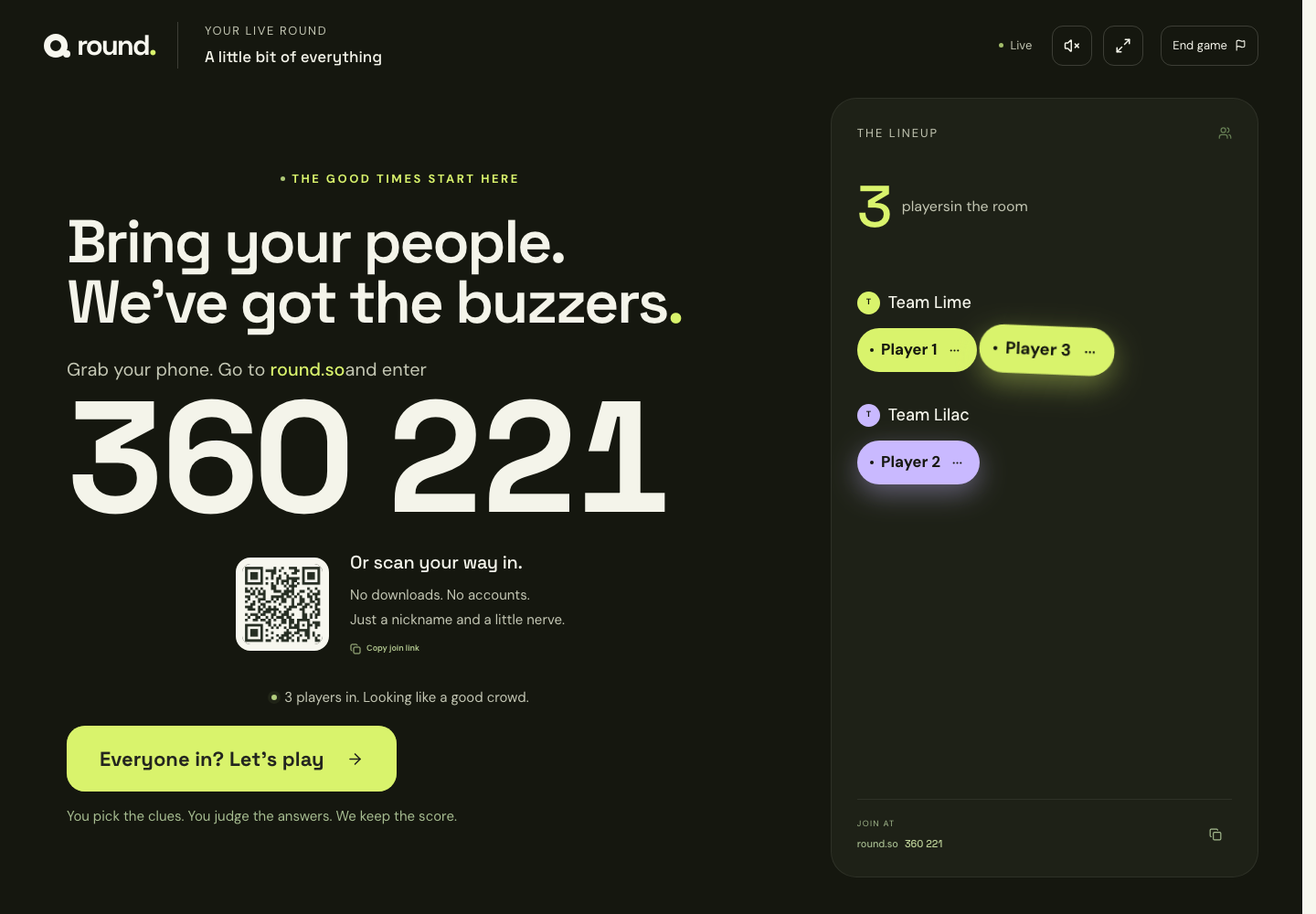
Leave this up. The code is the instruction. You should not also be explaining the guest Wi-Fi, the rules, and where the pizza is in the same minute. If the office network blocks the page, say so before you start and tell people to use their own data. A phone that cannot load is a hosting problem you can see in the lobby.
What an office party is allowed to know
Write the answer first, and only write an answer this room has already said out loud. The snack that disappears. The meeting that should have been an email, if that sentence is already a joke and not a complaint with a name on it. The city the offsite was in. The tool everyone pretends to understand. A 100 should be easy for more than one team, including the person who started last month. If the first clue is a test of who has been here longest, you have written a seniority contest, and the party did not need one.
Leave the performance review off the board. No quotas. No the person who missed the target. No a client’s private complaint. No money, unless it is the price of the snack in the kitchen and everyone laughs because they have all paid it. If a clue would be strange in a note that HR could read, it does not belong on a screen in the conference room. The party is not a channel for the thing you would not say in the all-hands.
Four columns is enough. One for the office as a place: the printer, the mug, the room with the bad chair. One for the work you actually share, in language a guest from another team could follow. One for the people, and this column is short on purpose: names you can say, roles you can say, the thing someone is happy to be known for. One that is simply easy, so the quiet table can score and stay. Values climb 100, 200, 300, 400. If the 100s are riddles, the warm-up never happens, and an office party does not have time to recover from a cold start.
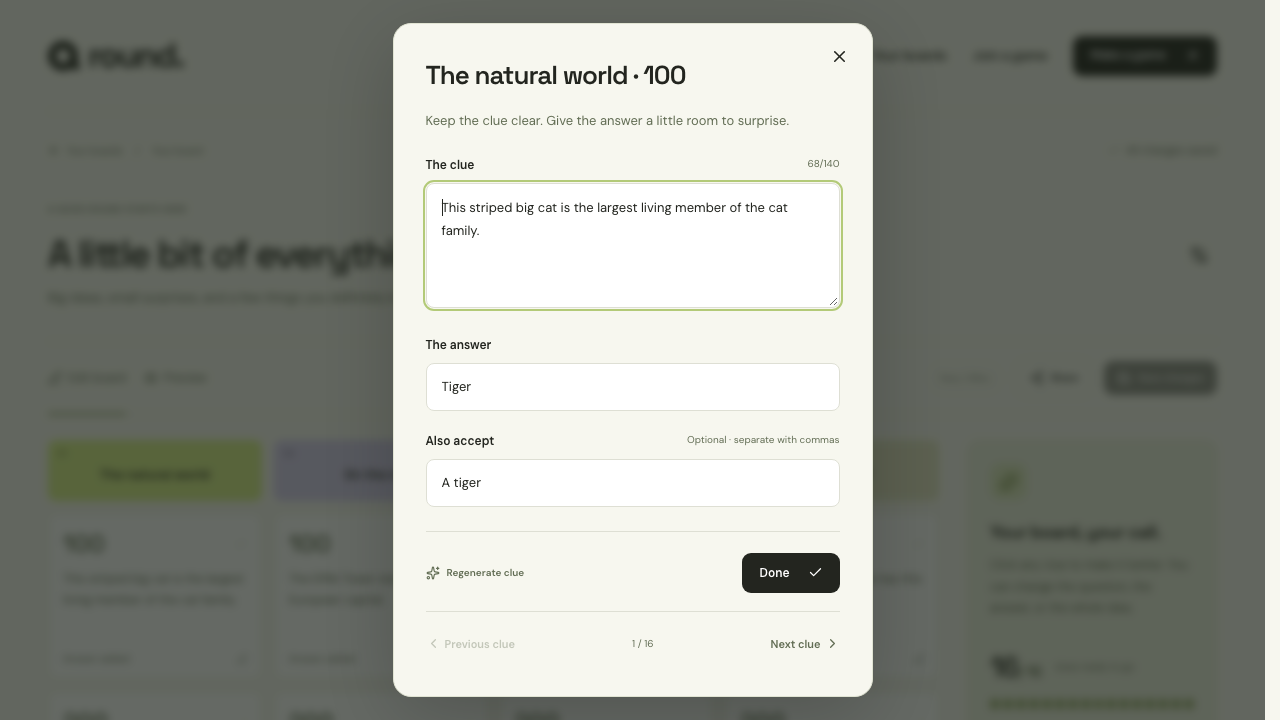
The card is the sentence you will read, the answer you want, and the other wording you will take. People will say the nickname of the tool and the name on the invoice. Write both before anyone is watching your face. You do not want to invent the rule while one team is the leadership table.
How the room plays
You read the clue with buzzing closed. Then you open it. A press while you are still talking does not win. That early press waits a quarter of a second after you open, which is enough to lose to the team that waited. Someone will test it, usually a person who plays bar trivia and wants the room to know. Let them. The next clue is calmer, and you do not have to give a speech about fairness.
The team that buzzes clean gets eight seconds. You judge. The clock does not mark them wrong while you are still listening. This is a party, so a wrong answer costs the value of the tile. That sting is why it feels like a game, and it is also why the 100s have to be easy. A deduction on the first clue, in front of someone’s manager, is a bad opening. Keep the top row generous. Do not change the rule halfway through because a director is losing. You will look like the score is a favor.
Ten seconds of nobody buzzing and the answer comes up. Do not coax. Coaxing is how a half-hour game becomes the rest of the evening, and the people with trains will leave in the middle and feel rude for it. After a right answer, that team picks the next tile. If one team is running away with it and the other has gone quiet, you can hand a pick across the room once. “Your pick, then one from the other side.” Offices understand turns. They have agendas. Use that, and do not invent a second scoring system on a whiteboard.
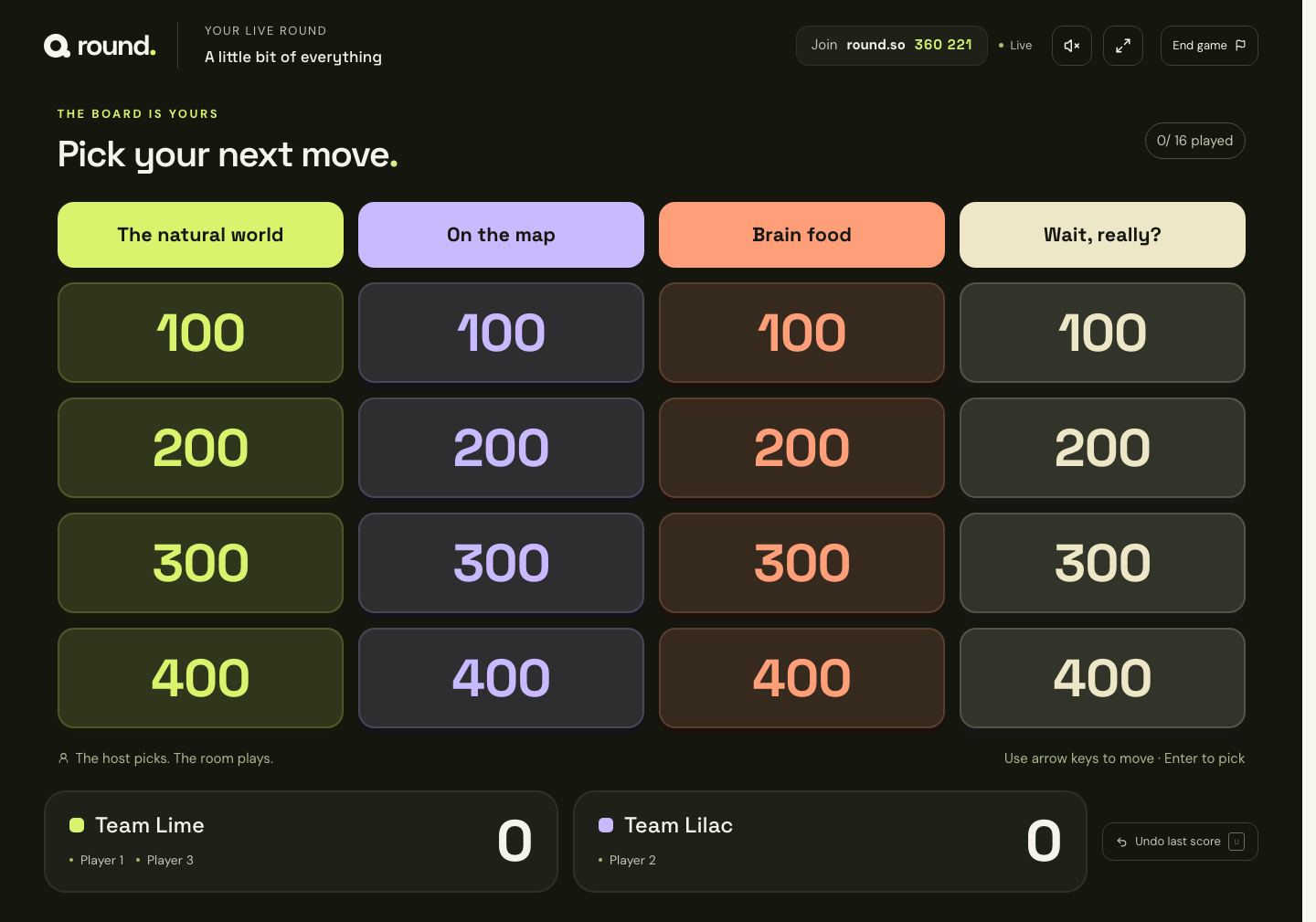
You run the grid from this screen. Their phones buzz. The score under the board is the score. There is no second spreadsheet, and there should not be a photo of the final numbers in the team chat unless the room wants it. Ask. A party score is not a record.
The manager, the new person, and the one who knows everything
If you are the boss, think once before you host. You can read the clues. You should not also be the person whose opinion of the answer matters for someone’s job. Say that out loud if you need to. “This score stays in this room.” Then mean it. Do not mention it in the one-to-one. A game that leaks into a review will not be played honestly the next time, and the next time is the point of having a board you can run again.
The person who started this month needs a way to score that is not a mercy point. The easy column is that way, if the 100s are things in the room they can see. Do not build four columns out of lore from before they arrived and then act surprised when they stop buzzing. Give the long-timers one column to sweep. Give the room three columns a person with a badge from this year can live in.
The person who knows every acronym will be delighted, and then they will be loud. One column is their gift. If they shout an answer before a buzz, ignore it once. “We didn’t hear a buzz.” Then open it for real. You will annoy them slightly. The rest of the room will be relieved. Both are fine, and you only do it once.
Contractors and guests get the same phone rule as everyone else. They do not get a separate, worse game. If they should not see a clue, the clue should not be on the board. Write for the people who were invited, not for a tighter circle you wish had been invited.
When the hour is over
Name a winner. You do not need a prize that costs the company money. Bragging rights, the last slice, choosing next week’s snack. A prize with a logo and a value changes the way people hear a close call, and an office is already full of close calls. Keep this one cheap. If the night is meant to raise money, that is a fundraiser, and it belongs in the invite, not as a surprise bowl next to the pizza.
Stop when you said you would. If the room has to be empty at six, the room is empty at six, even with a column still closed. Read the score, thank the teams by names you can say in front of everyone, and close the laptop. Help with the boxes if that was the deal. A host who is still narrating clues while people are putting on coats has mistaken the game for the job.
If the Wi-Fi fails, you already said the backup. First hand fully up, eight seconds, same answers. The screen still shows the clue. The phones were the buzzers. For one round you can point. Then you end, because an office party does not get a second hour to debug the network.
Questions people ask before they send the invite
How long should office party games last?
Eight clues if the room is borrowed. Sixteen if you have a real half hour and the screen is already working. Say which one in the invite, in minutes. “A quick game” means a different number to the person who has to pick up a child.
Do people need an account?
No. A browser and the six-digit code. One phone per team. They do not install an app. If a phone cannot load the page, that team points, and you take the first clear hand.
Can the score affect someone’s review?
It should not. Say that the score stays in the room, and then leave it there. The board is a party, not an assessment. Write clues you would be glad to read with the whole invite list watching.
What if the party is the whole company?
Play the people who can see the screen. Free is 20 people and 6 teams. Night and Host are 100 people, and the team cap is still 6. A town hall is not one buzzer game. A room that can read the type is the party. The rest of the building can have the food.
Write it before the day
Sixteen clues, or the eight you will actually reach, written from this office and not from a list on the internet. Read them once, alone, in the kitchen at home or at your desk after the floor has gone quiet. If you stumble, or if a sentence makes you glance at the door, cut it.
You can start from a finished office board on the office party boards, or write your own on the create page. Pick Office. That is the party scoring, where a miss costs the tile, so keep the 100s easy. The sentences, if those are the part that stall you, are in trivia night questions you can read out loud. An office party does not need clever. It needs a stop time you mean.
Host an office party round
One screen, sixteen clues, phones as the buzzers. The office party boards are already written, or start from a blank grid.