Hosting note
Trivia Night Fundraiser
The folding table was supposed to be for the raffle. Someone has put the sign-in sheet on it, and the sign-in sheet has a cup of lemonade on the corner, and the doors were supposed to open ten minutes ago. Forty people were told 7:00. They will be here at 7:20, and a few of them came because they care about the team, the library, the shelter, or the parish, and a few of them came because they like being on a team. Both groups need the same thing from you. The game has to be good enough to stay for, and short enough that the reason they were invited still gets said out loud before people start looking for their coats.
A trivia night fundraiser works when the program is obvious. People pay, or they are asked, in a way they can repeat to the person who drove them. They play. Somebody says, in one sentence, what the money is for. They play a little more, or they buy the raffle ticket while they are still in a good mood. Then you stop. The halls that run long are the ones where the game became the point and the cause became the apology at the end.
This is for the person who got volunteered. The classroom review, if the hour you needed was third period, is Jeopardy classroom games for a real period. The living-room version is how to host a trivia night at home. A fundraiser is those shapes with a treasurer in the room.
What people think they are buying
Say it on the flyer in plain language. Date, place, what it costs, what the money is for, and that a phone is useful and a pencil is not required. "Trivia night" on its own is not an invitation. People want to know if they are subsidizing a gym floor, a travel team, a food pantry, or a general fund nobody can describe. If you cannot finish the sentence "this pays for," you are not ready to sell a ticket, and the game will not save you.
You do not need a designed poster to say that. A half-sheet with those five facts will outperform a beautiful flyer that forgets the price. Put the same five facts in the email, because the person who forwards it will not attach your PDF.
How much to charge, without pretending there is a standard
There is no honest single price. A school gym and a rented hall are different evenings, and a suggested donation is a different ask from a ticket that keeps someone out. Work it from the costs you have already promised. The room, if it is not free. The food, if you said there would be food. The printing. Divide that by the number of people who have actually told you they are coming, not the number you hope will come. Look at the result and ask whether you would pay it to support this cause on a weeknight. If you would hesitate, the people you most want in the room will hesitate too. Charge less and make the rest on a raffle or a dessert table you can explain in one line.
If the cause is the reason the night exists, do not hide a second fee inside the rules. "Tickets are $15 and teams must buy a mulligan" is how a friendly room decides the organizer is clever. One price, said once, at the door. Anything extra is optional and visible.
Keep the cash handling dull. Two people at the table. A list. A jar that is not also the lemonade station. You are not preparing a tax opinion here. You are making sure the envelope at the end matches the number of names, so the person who asks on Monday gets a boring answer.
The order of the night
Open the doors before you are ready, because they will open themselves. Have the join code on the screen while people are still buying tickets, so a team can sit down and feel the night has started. Six digits, large enough for the back row. Nicknames. One phone per team. If a table of eight all want to buzz, they will fight each other. Ask them to pick one phone. Tell them it is so you can hear a winner, which is true.
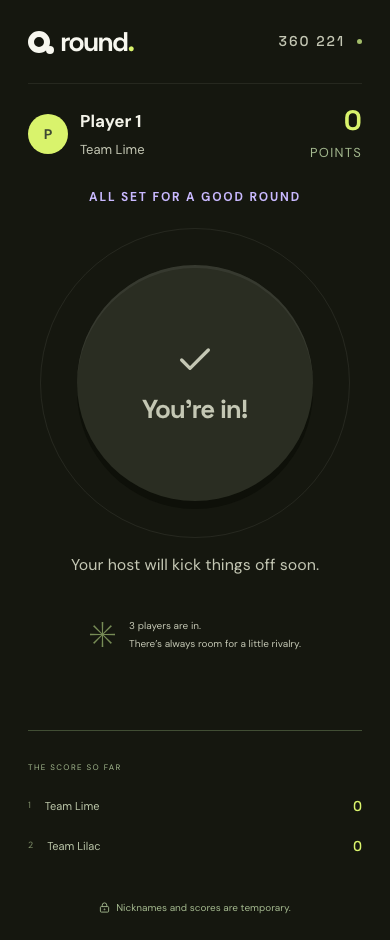
This is what their side looks like before you start. They can see their team. They can see that other people have joined. You can take the microphone, or just the front of the room, without also walking table to table.
Welcome them in under five minutes. Thank the person who unlocked the building. Say what the money is for, once, in a sentence a seventh-grader could repeat. Then play. Do not preview all the raffle items first. The raffle is a pause you will want later, when people have points and are willing to listen.
One board is sixteen clues, four categories, values 100 through 400. In a hall, with late arrivals and a child who needs the bathroom, plan on about thirty-five to forty-five minutes for that board if you keep moving, and longer if you tell a story after every answer. Tell the story after the misses, one sentence, and move. Twelve clues is a complete game if the clock is being eaten by speeches. Leave the bottom row for a table that asks. A fundraiser that finishes its game is more generous than a fundraiser that reaches clue seven and then rushes the ask because the custodian is standing in the door.
Put the ask between the game and the raffle, or between two short boards if you truly have two. You already said the sentence at the welcome. This is the second time, and it should be the same sentence, plus whatever number you are willing to say out loud if you know it. Then sell the raffle tickets while the scores are still on the screen and people are still sitting as teams. A team will egg each other on. A room that has already stood up to find coats will not.
Then stop. Thank them. Read the winner. Do not start a sudden-death clue because the scores are close, unless the room is shouting for it. Close scores are a gift. They mean people stayed. Let them leave on that.
Questions a mixed room can answer
A fundraiser crowd is not your group chat. You will have the family who knows every capital, the table of coworkers who came to be polite, and somebody's uncle who has decided trivia is a young person's hobby and would like to be proved right. Build one column they can all land. The town you are in. The cause itself, with 100-point clues taken from the flyer and the website, so showing up prepared is possible. A soft pop-culture column with answers from the last few years, not from a semester you happened to enjoy in college.
Save the vicious 400s for a single column, and make that column obviously hard in the title, so choosing it is a dare and missing it is funny. "Said it in the brochure" can sit next to "You would have to look this up." People will raid the brochure column first. Good. Every table on the board is a table that will stay for the raffle.
If children are playing, switch the tone. School scoring does not subtract on a miss, and the score stays at zero or above, because a table of fourth-graders watching a negative number will decide the night is for the adults. Party scoring, where a wrong answer costs the face value of the tile, is for a room of grownups who paid for the sting. Know which room you rented. Write it on your notes. Do not discover it when a parent is unhappy.
Read every clue out loud the day before, in the empty hall if you can. The microphone, if you even need one, will swallow the ends of sentences. "All of the following except" does not survive a microphone. A name, a number, or a short phrase does. The clue editor will nag you when a sentence gets long. Believe it. A hundred and forty characters is about one breath, and one breath is all you get when someone is rattling a raffle ticket.
Prizes that do not change the math
The prize for winning the game should be bragging and something small. A trophy from a thrift store. A gift card that would not cover dinner. The moment a prize is large enough to matter, close calls stop being funny, and you become the person who stole twenty dollars from a table with a judgment call about "a tiger" versus "tiger."
Put the money-shaped prizes in the raffle, where chance is the story and your judging is not. Say what each raffle item is, who gave it, and what a ticket costs. Draw it after the game, not during clue six. If you draw during the game, you will do it three more times, because it worked, and the board will die of interruptions.
Thank the donors of the prizes by name if they are in the room, and from a list if they are not. Skip the biography. They came to be useful, not narrated.
A school fundraiser, specifically
Parents will ask if this is appropriate, and they mean two things. Will the questions embarrass a child, and will the evening embarrass a family that cannot spend much. The first one you control with the board. No cruelty, no brand-quiz showing off who bought what, no clues that require a subscription. The second one you control with the price and with a free way to play. A family that volunteers can have their table covered. Write that on the flyer too, in the same plain voice as the price, so it does not feel like a secret scholarship.
Teams of parents and kids together are the best version of this, one phone, the kid often the one who buzzes because their thumb is faster and their parent is the one who knows Andorra. Let that happen. It is the photograph people actually wanted when they agreed to come.
If you will run the night again next year, save the board. October's town column can be January's town column with three clues swapped for whatever the cause did in the meantime. Rebuilding a slide file the week of the event is how the treasurer ends up hosting, badly, because the person who owned the file moved.
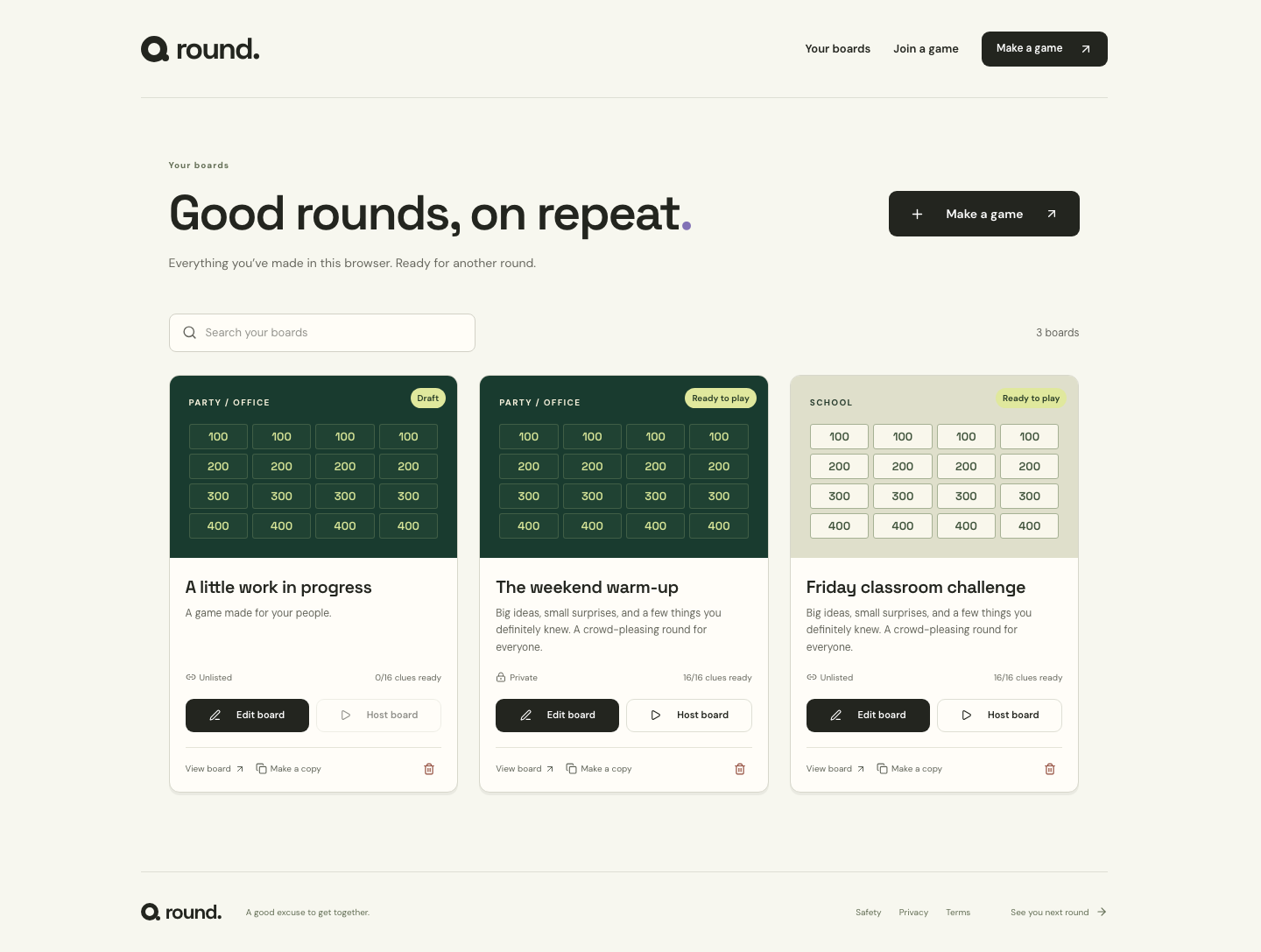
Next year's version starts from a copy, not from a blank week. The school board and the grown-up board should not be the same file. The scoring is different, and so is the joke you are willing to make.
The custodian, and the other clock
You have a second clock besides the buzzer. The building. Ask what time the lights want to be off, and plan to be done twenty minutes before that, because coats and the last raffle ticket and the lemonade cup on the sign-in sheet will use those twenty minutes. A host who ends on time gets invited back by the people who have the keys. A host who is brilliant and runs over gets a tighter room next time, or no room.
If the Wi-Fi in the hall is a rumor, and in plenty of halls it is, test it the day before with three phones on the guest network. If it fails, you already have a backup you mentioned at the welcome. You point to the first captain whose hand is fully up. Eight seconds. Same scores. The screen still shows the clue. You are the buzzer for the night, and you said so before anyone needed you to be.
Questions that come up in the planning thread
How does a trivia night fundraiser work?
People pay a stated amount, or give what they can, and then play a hosted game of about a dozen to sixteen clues in teams. You say what the money is for at the start and again before the raffle. The raffle, the dessert, or the donation table is where the extra money lives. The game is why they sit still long enough to hear you. It is over when the winner is announced, not when you have exhausted your question pile.
How much should we charge?
Add up the costs you have already promised, divide by the people who have said they are coming, and then lower it if you would not pay that number yourself. Make the rest on something optional. Put the number on the flyer. A surprise price at the door raises less than a clear one, because some of your people will turn around.
What prizes work?
A small prize for the winning team, and raffle prizes for everyone else. Keep the game prize too small to fight over. Thank the people who donated the raffle items by name. Draw the raffle after the last clue, while people are still in their teams.
Can we run one with students in the room?
Yes. Use questions you would let a child read, keep misses from driving a score below zero, and give every family a way to play if the ticket price is the barrier. One phone per team. A parent and a kid on the same team is a feature.
The week of the event
Finish the clues before the week of the event. The week of the event is for the door price, the raffle list, the person with the key, and the sentence about the money. Read the clues once in the room if you can. On the night, start before you feel ready, play one board, say the sentence, sell the raffle, name the winner, and go home while people are still glad they came.
Host the board from the create page, and keep a copy for next year. If the sentences are the part that feels shaky, the companion piece is trivia night questions you can read out loud.
Host a trivia night round
One screen, sixteen clues, phones as the buzzers. The trivia night boards are already written, or start from a blank grid.