Hosting note
Baby Shower Games the Room Plays Together
Someone has already bought the tiny socks, and someone else has asked what the game is, because a shower without a game feels, to certain guests, like a meeting. You can feel the list forming: a blindfold and a jar of mush, a race to write advice on a card, a quiz about the size of a lemon at week nineteen. Some of those still belong in the room. A lot of them ask the person who is pregnant to be the entertainment, and they ask everyone else to perform a task they would not do at any other party. Baby shower games work better when the room plays together, on one screen, and the clues are things these people can actually answer without guessing the weight of a stranger’s baby.
One board. Four categories. Sixteen clues, scored 100, 200, 300, and 400. The board goes on a television or a laptop everyone can see. Phones are the buzzers. You read the clue, you open the buzz, you decide who was right, and the score stays on the screen. Guests join with a six-digit code in the phone browser. No app and no account, which matters when the guest list is your aunt, your coworker, and a friend from college who does not want a new login between the sandwiches and the gifts.
If the party is a birthday and the person in the crown is the subject, the closer plan is birthday party trivia the guest of honor can stand. A Saturday with no baby in it is how to host a trivia night at home. A shower is shorter than a trivia night and kinder than a roast. The person at the center should be glad to hear every clue, and they should be allowed to sit down.
What this room is tired of playing
The games people remember from the last shower are usually a task. Melt a chocolate bar in a diaper. Name the baby food from a spoon. Estimate a due date on a piece of paper and then wait to be wrong in public. Those can be funny in a room that already likes each other and has agreed to the joke. They are a bad default for a guest list that includes a boss, a father-in-law, and a friend who came straight from work. Nobody should have to taste something for a point.
A shared screen skips the dare. The game is a conversation the room can see. Teams buzz. You judge. People who do not want to stand up can still play, which is the whole point of a party where at least one person is not interested in standing. You can still do a gift opening. You can still do a toast. The board is the part that used to be three awkward contests in a row, and it should take less time than those contests took.
Say what you are not doing, once, if someone arrives expecting the jars. “We’re doing one round on the screen, then gifts.” That sentence saves you from a guest who brought a game in a bag and will otherwise run it. Their game can be offered. It does not have to be accepted. You are allowed to host the party you planned.
What the board is allowed to know
Write the answer first, and only write an answer the parents-to-be have said out loud or handed you. The name they like, if they have said it and want it said again. The city where they met. The song they play in the car. The food they are sick of. A 100 should be easy for more than one person in the room, or the first clue is a test of who has known them longest. A shower is a poor place to rank the friendships.
Leave the body out of it. No weight. No symptoms as punchlines. No “what size is the baby this week” unless they think that game is fun and told you so. A medical detail is not a clue because you read it on a website. If you would not say it at the table during lunch, do not put it on the board. The 400 can be a small true thing, a detail one friend remembers, and it should still be a detail they like. The first ultrasound story is a gift if they tell it. It is a trap if the room includes people they have not told the hard parts.
Four columns is enough. One for the parents. One for the people in the room, so a guest who met them this year can still score. One for the practical nonsense of a baby arriving: the thing you actually need in the first week, the thing people buy that sits in a closet. One that is simply easy, songs or a city or a year you all share, so a table of coworkers is not shut out of a family party. Values climb with the points. If the 100s are riddles, the warm-up never happens, and a shower does not have time to recover from a cold start.
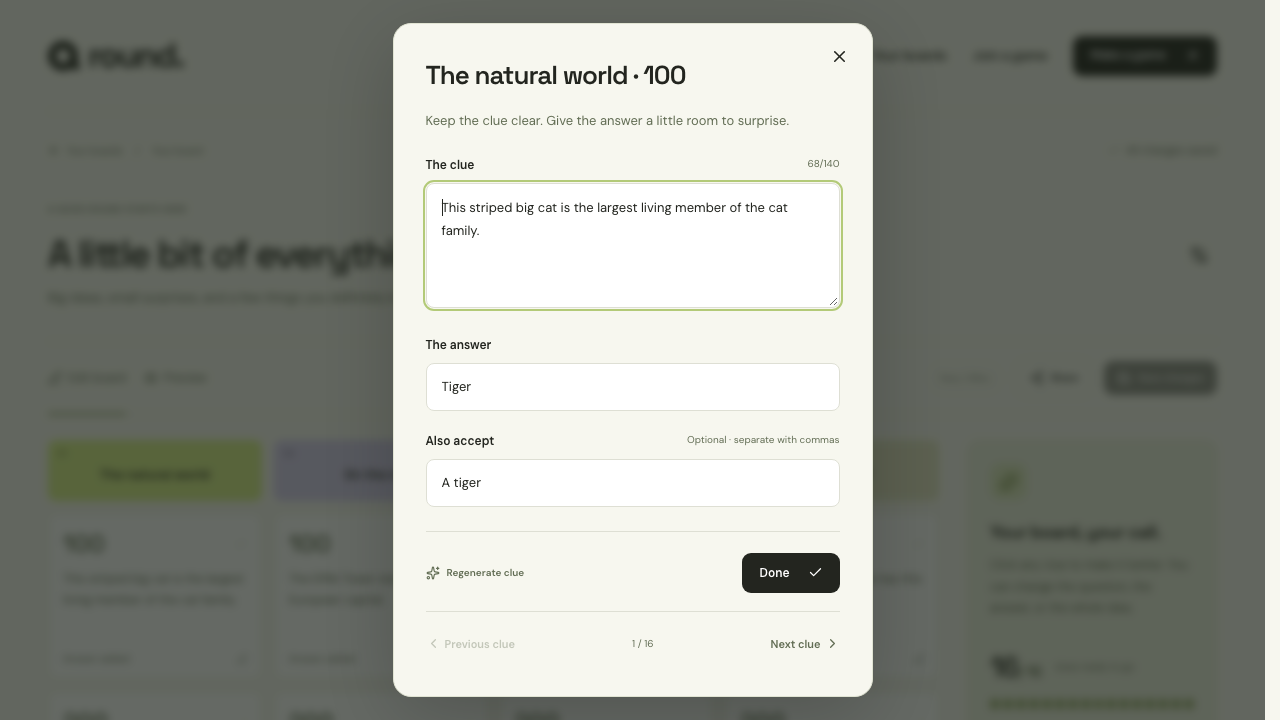
Put the other wording on the card before anyone is watching. People will say the nickname, the full name, and the name the grandparents use. Decide all three. You do not want to negotiate it while one team is the grandparents.
How long to play, and when
A shower has a shape. People arrive, they eat, somebody wants a game, then gifts, then people with kids of their own start looking at the door. One board is about twenty-five to thirty-five minutes once buzzing makes sense, plus a few minutes while people join. That is a good middle of the party if gifts are not also going to take an hour. If gifts are the point and the list is long, play eight clues, the 100s and the 200s, and stop. Say that limit at the start. A closed board with tiles still shut is fine. An unfinished game that collides with the presents is how the guest of honor ends up opening blankets while you are still hosting.
Put the code up while people are still getting food. One phone per team. Teams of two or three. Couples can share a phone if the afternoon is gentle. A team of one will buzz faster than anyone and then the game becomes that person’s show. A team of six will elect a spokesperson by the second clue. Three is plenty.
Free covers 20 people and 6 teams. A Night pass is $12 for 48 hours and 100 people. Host is $6 a month, or $48 for the year, with the same 100-person room. Players never pay. Most showers fit in the free room. If yours does not, the limits are the same ones on the pricing page. Do not promise buzzers to a crowd that cannot see the screen.
You read the clue with buzzing closed, then you open it. An early press waits a quarter of a second, so mashing during the sentence does not win. The team that buzzes clean gets eight seconds. You judge. The clock does not mark anyone wrong by itself. At a party, a wrong answer costs the value of the tile. At a shower, that sting is optional trouble. If the room is adults who like a little competition, leave it. If the room is grandparents, coworkers, and a person who cried in the car, pick Kids on the way in. A kids’ room does not take points away for a miss, and the score cannot fall below zero. Friends and family keeps the party rule. Choose before the first tile. Do not switch when someone’s mother is bargaining.
Ten seconds of nobody buzzing and you reveal the answer. Do not coax. Coaxing is how a sixteen-clue board becomes the whole afternoon. After a right answer, that team picks the next tile. If one team is running away with it, you can hand the next pick across the room once, without a speech.
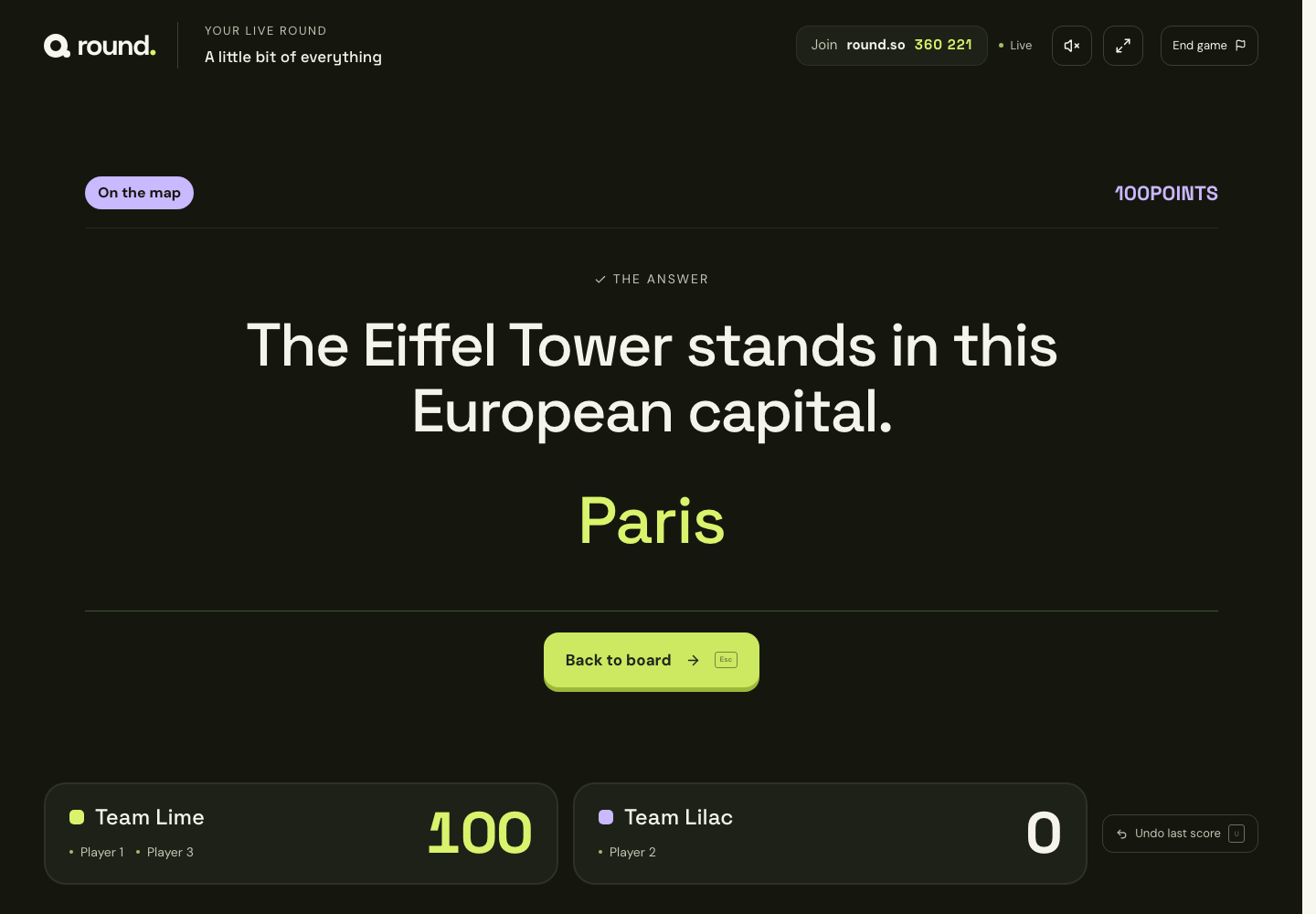
Say the answer, add one sentence if the room wants the story, and go back. The button is on the screen so you are not hunting through a stack of cards while someone tells a longer version.
The person who is pregnant is not the host
They can play. They should not have to run it. You keep the score, you read the clues, you decide the close calls. If they want to be on a team, put them with people who will not treat every answer as a referendum on how well they know their own life. They already know the due date. The game is for the guests.
Advice games are a different itch. If people want to write a note, give them a card by the gifts and let them write it while someone else is talking. Do not make the advice a clue. “What should the baby never eat” is a prompt for a speech, and speeches at a shower multiply. One toast is enough. The board is the part with a clock.
Names are the sensitive column. If they have a name and want it on the board, a 200 can be the name, and you should still accept the spelling they use. If they do not have a name, or they have one and are tired of hearing guesses, leave names off. A clue that asks the room to shout candidate names is not a game. It is the conversation they have been escaping. You can build a whole column on the nursery color, the city, the song, and the sandwich they want after the party, and never touch the name.
Partners in the room get a column only if they want one. A coed shower is not a license to quiz the father and ignore the person who is doing the harder job, and it is not a license to do the reverse. Write clues either of them has agreed to. If only one of them is there, the absent one does not become a set of jokes. They can have a fact, a song, a job, the same way anyone else on the board does.
Gifts, and the minute you stop
Open gifts after the board, or before it, but not during it. A half-read clue and a half-unwrapped blanket is two events, and both of them suffer. If you are the person writing down who gave what, you cannot also be the person judging answers. Hand one of those jobs to someone who asked how they could help and meant it.
You need a winner, because someone will ask. You do not need a prize that matters. The last cookie, bragging rights, a tiny ridiculous object that is not a baby item unless you were already giving one. A prize worth real money makes a gentle room hear a close call as a verdict. This is not a fundraiser. Nobody bought a ticket.
Stop while people still want another clue. That is earlier than you think. Name the score, thank the teams by the names on the screen, and move the laptop off the table where the gifts are going. If a guest wants to run their own game after, they may. You do not have to attend it as the host. You already did the round you promised.
Children who came with their parents can buzz if you picked a room that does not punish a miss, and they can also just watch. Do not hand a toddler the only phone on a team and then act surprised when the 400s take a while. One adult holds the phone. The child can say the answer. That split keeps the buzzer honest and the afternoon kind.
Questions people ask before they buy the cake
How long should baby shower games last?
One short round. Eight clues if gifts will take the hour. Sixteen if the party is mostly sitting and talking and you have half an hour that is not already promised to presents. Say the number when you invite people, so the guest with a nap schedule can plan. A second board is a different party.
Do you still do the tasting games?
Only if the guest of honor asked for them. A shared screen does not need a blindfold or a jar. If a guest brings one, you can thank them and still play the board you wrote. The person at the center does not owe the room a performance.
Can a coed shower play the same board?
Yes. Write clues both sides of the guest list can hear, and keep one easy column so the coworkers are not decoration. Skip the jokes that only work if everyone is the same kind of friend. The screen is in front of all of them.
What if someone cannot use a phone?
One phone per team is enough. A person who does not want to tap anything can still call the answer. If the Wi-Fi fails, you point to the first hand that is fully up and you keep the same answers. Say that once, at the start, so it is a plan and not a rescue.
Write the clues before the napkins
Ask for the facts you are allowed to use. Write the clues in one breath. Read them out loud in your kitchen. If a sentence makes you wince alone, it will be worse in the living room. Cut it.
Put the code up before you explain the rules. Make the teams. Play the rows you have time for. Open the gifts while people are still glad they came.
You can build the board from the baby shower boards, from notes they sent you, or from a blank grid on the create page. Pick Kids if a miss should not cost points. Pick Friends and family if the room came to compete a little and everyone buzzing is an adult. The sentences, if those are the part that stall you, are the subject of trivia night questions you can read out loud. A shower does not need clever. It needs clues you can finish before someone has to stand up.
Host a baby shower round
One screen, sixteen clues, phones as the buzzers. The baby shower boards are already written, or start from a blank grid.